
Cold chain logistics is the end-to-end, continuous temperature-controlled process that moves products from production through cold storage, transportation, distribution, and final delivery without a single break in temperature control. Any failure at any handoff point can compromise product integrity, trigger regulatory action, or render an entire shipment unusable. For logistics managers and supply chain professionals, understanding the role of cold chain logistics in delivery is not optional. It is the operational foundation for every temperature-sensitive product that reaches its destination fit for use.
What are the critical stages and components of cold chain logistics delivery?
Cold chain logistics is a system, not just a refrigerated truck. Every stage matters: production, cold storage, transportation, cross-docking, and last-mile delivery each carry distinct risks and require specific controls.
The five core stages of a cold chain delivery system are:
- Production and pre-cooling: Products enter the chain at the point of manufacture or harvest. Temperature control must begin immediately, before packaging or loading.
- Cold storage: Temperature-controlled warehouses hold products between production and dispatch. Warehouse design, door management, and zoning all affect product safety.
- Refrigerated transport (reefers): Vehicles equipped with active cooling systems carry products between facilities. Reefer performance must be validated for each lane and season.
- Cross-docking and distribution: Products transfer between vehicles or facilities with minimal storage time. This handoff is one of the highest-risk moments in the chain.
- Last-mile delivery: The final leg from distribution center to end recipient. Traffic delays, ambient exposure, and receiver readiness all create risk here.
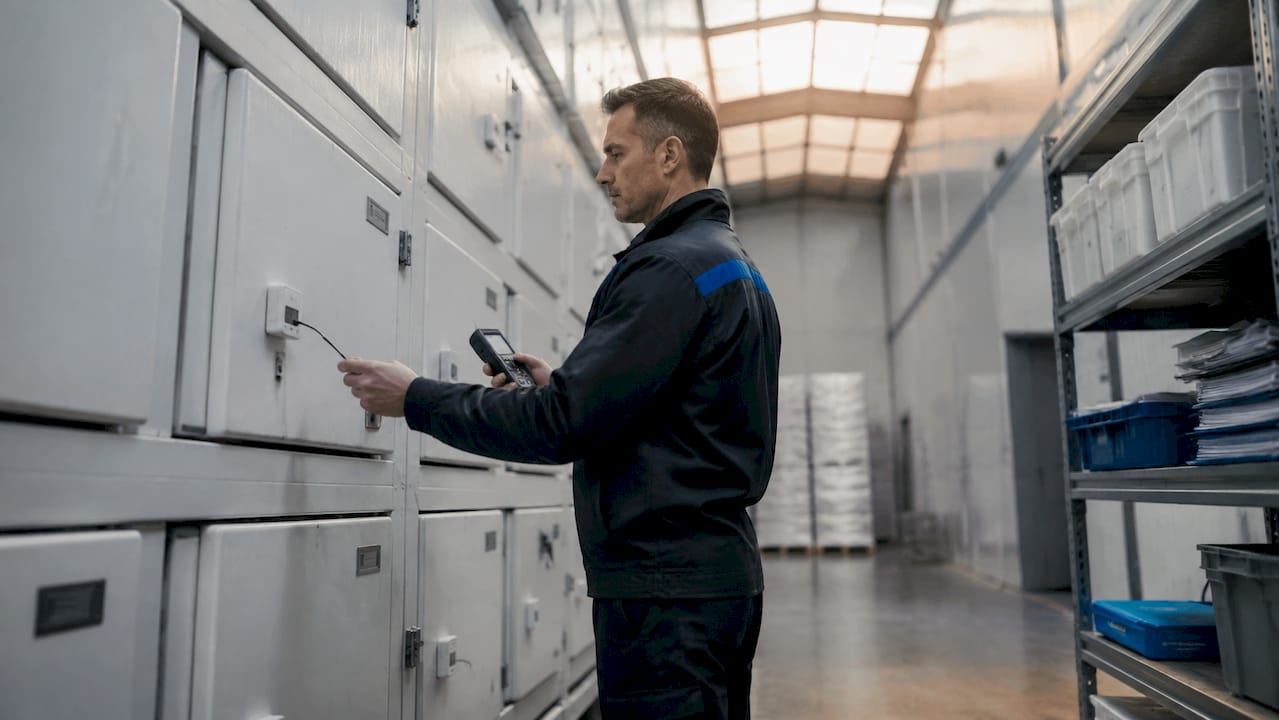
Continuous temperature monitoring ties these stages together. Fixed sensors at mapped worst-case locations log data in real time and trigger alerts when thresholds are breached. Monitoring software platforms collect and store this data for audit retrieval. Without continuous logging, gaps in the temperature record create compliance exposure regardless of actual product condition.
Pro Tip: Place sensors at the worst-case thermal zones identified during facility mapping, not just at convenient access points. Data from the most vulnerable locations is what regulators inspect first.
Why is temperature-controlled delivery essential for product integrity and compliance?
Temperature excursions outside a product’s specified range can render an entire shipment unusable. Pharmaceutical cold chains are less tolerant than food cold chains. A single excursion that would be acceptable for fresh produce can destroy a biologics shipment worth hundreds of thousands of dollars.
Different product categories carry different temperature tolerances. Consider these common requirements:
- Frozen biologics and vaccines: Typically require storage at 2°C to 8°C or colder. Even brief warming can denature proteins or reduce potency.
- Chilled pharmaceuticals: Usually maintained at 2°C to 8°C with narrow deviation windows. Stability data governs how much excursion is tolerable.
- Fresh produce and perishables: Generally tolerate slightly wider ranges, but humidity and ethylene exposure add complexity beyond temperature alone.
- Research-grade compounds: Require strict adherence to manufacturer-specified storage conditions to preserve purity and activity for downstream use.
Regulatory frameworks set the compliance floor. USP <1079.2> Mean Kinetic Temperature guidelines, updated in 2025 and 2026, define how to evaluate temperature excursions mathematically. The updated guidance specifically warns against using long averaging periods that mask short, high-magnitude excursions. A product that looks compliant on a 30-day average may have experienced a damaging 4-hour spike that the average conceals.
“The critical question is not just compliance at delivery, but the full excursion profile compared to product stability criteria for risk-based release decisions.” — Smith Consulting Partners
Last-mile delivery concentrates the most risk. Traffic delays, uncontrolled loading docks, and untrained receiving staff all create exposure windows. Products without supporting stability data cannot be released after an excursion, regardless of how minor it appears. The financial and safety consequences of a failed cold chain delivery are not theoretical. They are documented, recurring, and preventable.
How do operational challenges and best practices affect cold chain logistics in delivery?
The most common cold chain failures occur at handoffs, not in transit. Door-open intervals during loading and unloading, transfers between vehicles at cross-docks, and the moment a delivery driver hands a package to a recipient all create temperature exposure windows that monitoring systems must capture.
Operational best practices that reduce these risks include:
- Thermal mapping of facilities and lanes: Ongoing and seasonal mapping identifies the zones where temperature deviates most. Sensor placement justified by mapping data is far more defensible during an audit than sensor placement based on convenience.
- Route optimization and dispatch controls: Last-mile delivery is the most failure-prone segment. Scheduling deliveries to avoid peak traffic, limiting the number of stops per route, and dispatching during cooler parts of the day all reduce time-in-warmth.
- Packaging qualification by route: Packouts tested under one transit profile may not suit other routes. A validated package for a 4-hour domestic delivery will not protect a product on a 24-hour cross-country lane.
- Receiver training: Trained receiving personnel who know how to check delivery temperature logs, document arrival conditions, and escalate deviations are a critical but often overlooked control.
- Integration of real-time alerting: Monitoring devices that push alerts to responsible personnel during transit allow intervention before a minor excursion becomes a product loss event.
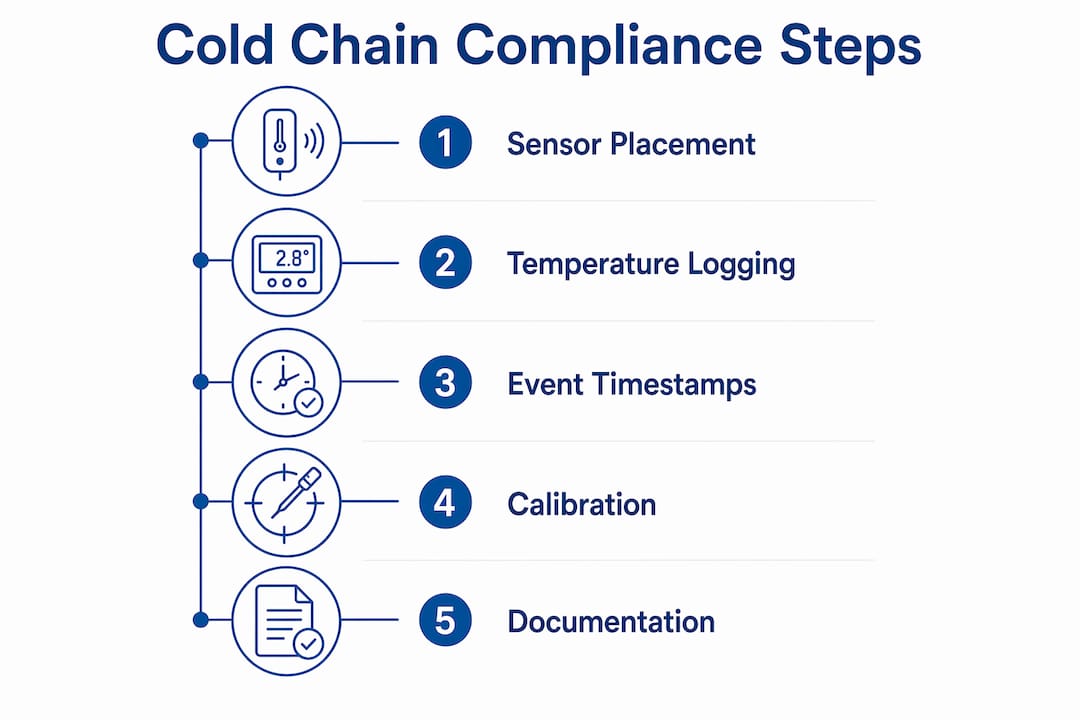
Pro Tip: Use event-linked timestamps in your monitoring records. Log the start time, peak deviation, and end time of every excursion as a discrete event. Raw temperature readings without event semantics are difficult to defend in a regulatory audit.
What are the compliance and monitoring requirements for cold chain delivery in 2026?
GDP compliance sets the documentation standard for temperature-controlled delivery across pharmaceutical and life sciences supply chains. The core requirements are continuous control and retrievable records. Incidents require prompt detection, impact assessment, qualified-person disposition, and corrective action.
| Requirement | Standard or Guidance | Key Detail |
|---|---|---|
| Continuous temperature logging | GDP / EU GMP Annex 15 | Sensors must log without gaps; real-time alerts required |
| Worst-case sensor placement | GDP Warehouse Compliance | Placement justified by thermal mapping data |
| Excursion evaluation method | USP <1079.2> MKT (2025/2026 update) | Avoid long averaging periods that mask short high spikes |
| Excursion event documentation | Appleko / Regulatory practice | Log start, peak, duration, and custody event correlation |
| Stability data requirement | Smith Consulting / ICH Q1 | Products without stability data cannot be released post-excursion |
| CAPA and deviation investigation | GDP | Qualified person must document disposition and corrective action |
Excursion event semantics are the detail most teams underestimate. Regulators and insurers need to know the start time, peak temperature, duration, and which custody event correlates with the excursion. Raw data files that show a temperature spike without context are insufficient for a risk-based release decision. Building event semantics into your monitoring workflow from the start saves significant time during deviation investigations.
Sensor calibration is a separate but equally critical requirement. Sensors must be calibrated at intervals defined by your quality system, and calibration records must be retrievable. A sensor that drifts out of calibration silently invalidates every reading it has produced since the last verified calibration date.
How can cold chain logistics improve supply chain efficiency and reduce losses?
Effective cold chain delivery systems reduce product loss, lower insurance exposure, and improve customer satisfaction. Cold chain logistics directly improves shelf life and reduces postharvest losses for perishable goods. The financial case for investing in cold chain infrastructure is straightforward: the cost of a robust monitoring and transport system is a fraction of the cost of a single rejected shipment.
Real-time visibility data does more than prevent losses. It enables root cause analysis after deviations, supports continuous improvement of packaging and routing decisions, and provides the evidence base for renegotiating carrier contracts when performance falls short. Teams that treat cold chain data as a strategic asset rather than a compliance burden consistently outperform those that collect data only to satisfy auditors.
| Metric | Traditional cold chain | Optimized cold chain |
|---|---|---|
| Temperature excursion detection | Post-delivery review | Real-time alert during transit |
| Sensor placement | Convenient access points | Worst-case mapped zones |
| Excursion documentation | Raw data logs | Event-linked timestamps with custody correlation |
| Last-mile risk management | Standard routing | Optimized dispatch with receiver training |
| Product release decision | Time-based assumption | Stability data comparison |
| Audit readiness | Reactive document retrieval | Continuous retrievable records |
Synchronizing production schedules with delivery routes is an underused efficiency lever. When a production batch completes at a time that aligns with an optimized dispatch window, the product spends less time in intermediate storage and less time in transit. Fewer handoffs mean fewer excursion opportunities. The cold chain efficiency gains from schedule alignment are operational, not just technological.
Key takeaways
Cold chain logistics protects product integrity through continuous temperature control, event-level documentation, and compliance-ready monitoring across every delivery stage.
| Point | Details |
|---|---|
| System thinking over equipment | Cold chain is a coordinated system of storage, handling, and monitoring, not just refrigerated transport. |
| Last-mile is highest risk | Traffic delays, handoffs, and ambient exposure make last-mile delivery the most failure-prone cold chain segment. |
| Event semantics are audit-critical | Log excursion start, peak, and duration as discrete events, not just raw temperature readings. |
| MKT guidance updated in 2026 | USP <1079.2> now warns against long averaging periods that mask short, damaging temperature spikes. |
| Stability data governs release | Products without supporting stability data cannot be released after an excursion, regardless of apparent severity. |
What I’ve learned from watching cold chains fail at the last mile
After years of working with temperature-sensitive supply chains, the pattern I see most often is not a refrigeration failure. It is a documentation failure at the handoff. The product arrives within range. The monitoring device recorded the transit correctly. But the receiving team has no protocol for reviewing the data, no training on what an excursion event looks like, and no escalation path. The excursion happened during the 20-minute wait on a loading dock, and nobody correlated it with the custody timestamp.
The cold chain in transportation conversation focuses heavily on equipment: reefer units, phase-change materials, validated packaging. Those matter. But the audit-vulnerable gap is almost always the human handoff. Door-open intervals, loading delays, and untrained receivers create more product losses than equipment failures in my experience.
The 2025/2026 update to USP <1079.2> is a signal worth taking seriously. Regulators are specifically targeting the misuse of Mean Kinetic Temperature averaging to make excursions look acceptable. If your team is using MKT as a blanket pass/fail tool without examining the excursion profile against stability data, you are exposed. The fix is not complicated. It requires event-level logging, stability data on file, and a qualified person who understands what the data actually means.
My practical advice: treat every handoff as a potential excursion event and build your monitoring workflow to capture it. The teams that do this consistently have shorter deviation investigations, cleaner audits, and fewer product losses. The technology exists. The gap is almost always process and training.
— Paul
Novatherix Laboratories and temperature-sensitive product integrity
Research-grade compounds require the same unbroken temperature control that pharmaceutical supply chains demand. Novatherix Laboratories ships research peptides with rigorous third-party analytical testing, verified 99%+ purity, and full transparency through certificates of analysis for every product.
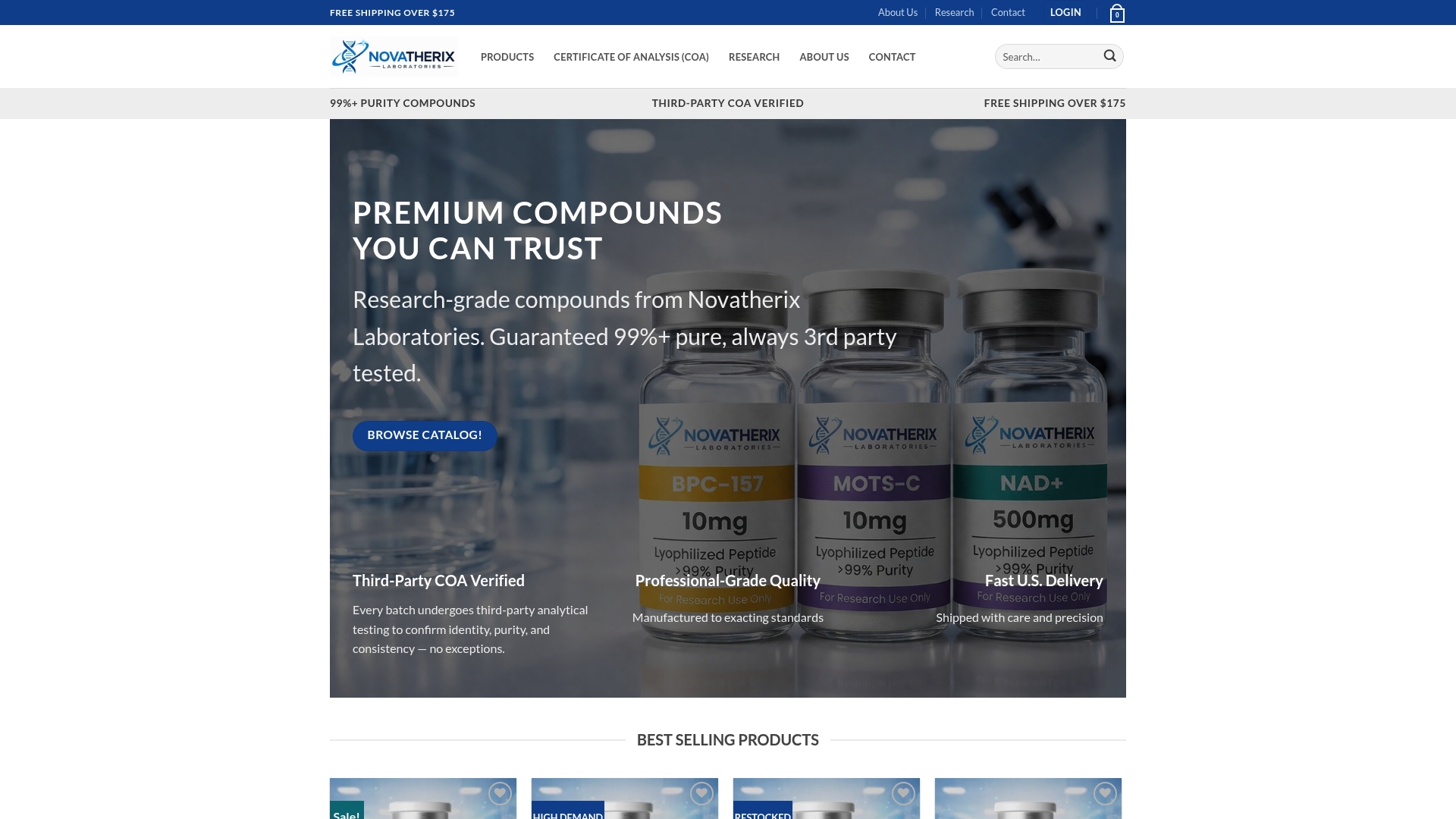
For supply chain professionals who source temperature-sensitive research compounds, product integrity starts before the shipment leaves the facility. Novatherix provides fast U.S. delivery with documented purity verification, so researchers receive compounds that match the specifications on record. Explore the full catalog of research-grade compounds at Novatherix to see how third-party testing and cold chain commitment translate into reliable, audit-ready sourcing.
FAQ
What is the role of cold chain logistics in delivery?
Cold chain logistics maintains continuous temperature control from production through final delivery to preserve product integrity and meet regulatory requirements. Any break in the chain at any handoff point can compromise the product and trigger compliance action.
What are the biggest challenges in cold chain logistics?
Last-mile delivery is the most failure-prone segment due to traffic delays, ambient exposure, and untrained receiving personnel. Handoff intervals during loading and cross-docking are the most audit-vulnerable points in the chain.
What does GDP compliance require for cold chain delivery?
GDP compliance requires continuous temperature logging, retrievable records, worst-case sensor placement justified by thermal mapping, and documented deviation investigation with qualified-person disposition and corrective action.
How does USP <1079.2> affect excursion evaluation in 2026?
The 2025/2026 update to USP <1079.2> warns against using long Mean Kinetic Temperature averaging periods that mask short, high-magnitude excursions. Excursion evaluation must compare the full event profile against product stability data, not just a time-averaged result.
Why is last-mile delivery the highest-risk cold chain segment?
Last-mile delivery concentrates risk because it involves the most handoffs, the least controlled environments, and the greatest exposure to ambient temperature variation. Route optimization, dispatch timing, and receiver training are the primary controls for reducing last-mile losses.
Recommended
- Shipping Information – Novatherix Laboratories
- Research Preparation & Reconstitution Guide – Novatherix Laboratories
- DSIP – Novatherix Laboratories
