
Lyophilization is defined as a three-stage dehydration process that removes water from frozen compounds through sublimation and desorption, producing a stable porous solid suited for long-term storage. Researchers working with peptides, biologics, and diagnostic reagents rely on this technique because it preserves biological activity and chemical integrity without exposing compounds to damaging heat or liquid water. The process, formally known as freeze-drying, is the standard preservation method across pharmaceuticals, diagnostics, and research laboratories. Understanding what is lyophilization in compound storage means understanding three sequential stages: freezing, primary drying by sublimation, and secondary drying by desorption. Each stage controls a different threat to compound quality.
What is lyophilization in compound storage and how does it work?
Lyophilization removes water from a frozen sample by converting ice directly into vapor under vacuum, bypassing the liquid phase entirely. This three-stage process produces a stable porous solid that retains the compound’s original structure and activity. The absence of liquid water during drying is the defining advantage over conventional evaporative or spray-drying methods.
The three stages proceed in strict sequence, and each one sets the conditions for the next.
-
Freezing. The sample is cooled below its eutectic or glass transition temperature. Ice crystals form throughout the product matrix. The freezing rate matters significantly: slow freezing produces large ice crystals that leave wide channels in the dried cake, speeding up subsequent sublimation. Rapid freezing produces smaller crystals and a denser matrix, which can slow drying but may better preserve protein structure. Controlled annealing steps, where the product is briefly warmed then refrozen, are used to homogenize crystal size and improve batch consistency.
-
Primary drying. The chamber pressure drops to a vacuum, typically in the range of 50–200 microbars. At this pressure, ice sublimes directly into water vapor without melting. The vapor is captured by a condenser held at a temperature well below the product shelf. Shelf temperature is raised gradually to supply the energy needed for sublimation, but the product temperature must stay below the formulation’s collapse temperature throughout. Exceeding that threshold causes the frozen matrix to melt and degrade, a failure that is visible as a collapsed or glassy cake and represents a QC failure.
-
Secondary drying. After primary drying, residual moisture sits at roughly 5–10% as bound water adsorbed to the product matrix. Secondary drying removes this bound water by raising shelf temperature further while maintaining vacuum. The target residual moisture for most research compounds is 0.5–3%. Hitting that window is critical: too much moisture accelerates degradation, and too little can damage protein conformation.
Pro Tip: Use a thermocouple or wireless temperature sensor inside representative vials during cycle development. Product temperature data, not shelf temperature alone, determines whether primary drying is truly complete before the secondary drying ramp begins.
Why is lyophilization preferred over other drying methods for compound storage?
Freeze-drying is the preservation method of choice for compounds that cannot tolerate heat or prolonged exposure to liquid water. Spray drying, rotary evaporation, and air drying all require elevated temperatures or pass the product through a liquid phase, both of which degrade sensitive biologics, peptides, and enzyme preparations.

The core advantage is sublimation. Water removed by sublimation never contacts the compound in liquid form, which eliminates hydrolysis reactions and prevents the conformational changes that liquid water triggers in proteins and peptides. The result is a product that retains potency, biological activity, and structural integrity at levels that conventional drying cannot match.
Key benefits that make lyophilization the standard for sensitive compound storage:
- Extended shelf life. Lyophilized compounds stored at controlled conditions remain stable for years, compared to months for liquid formulations.
- Room-temperature shipping for many reagents. Lyophilized products can eliminate cold chain requirements for a wide range of reagents, cutting logistics costs and reducing the risk of temperature excursions during transit.
- Preserved biological activity. Freeze-drying at low temperatures maintains potency and structure of fragile biologics, including antibodies, enzymes, and synthetic peptides.
- Reduced degradation pathways. Removing water suppresses oxidation, hydrolysis, and microbial growth simultaneously.
- Reconstitution flexibility. The porous cake structure dissolves rapidly and completely when the researcher adds the appropriate solvent, restoring the compound to a defined concentration.
“Freeze-drying avoids elevated temperatures and liquid water exposure, preserving fragile biologics and enabling high-value formulations that no other drying method can reliably produce.” — SP Industries
Compounds particularly suited for lyophilization include synthetic peptides like BPC-157, PT-141, and Selank; monoclonal antibodies; enzyme preparations; and nucleic acid reagents. Each of these degrades rapidly in aqueous solution but remains stable for extended periods as a lyophilized solid.
What are the common risks and quality challenges during lyophilization?
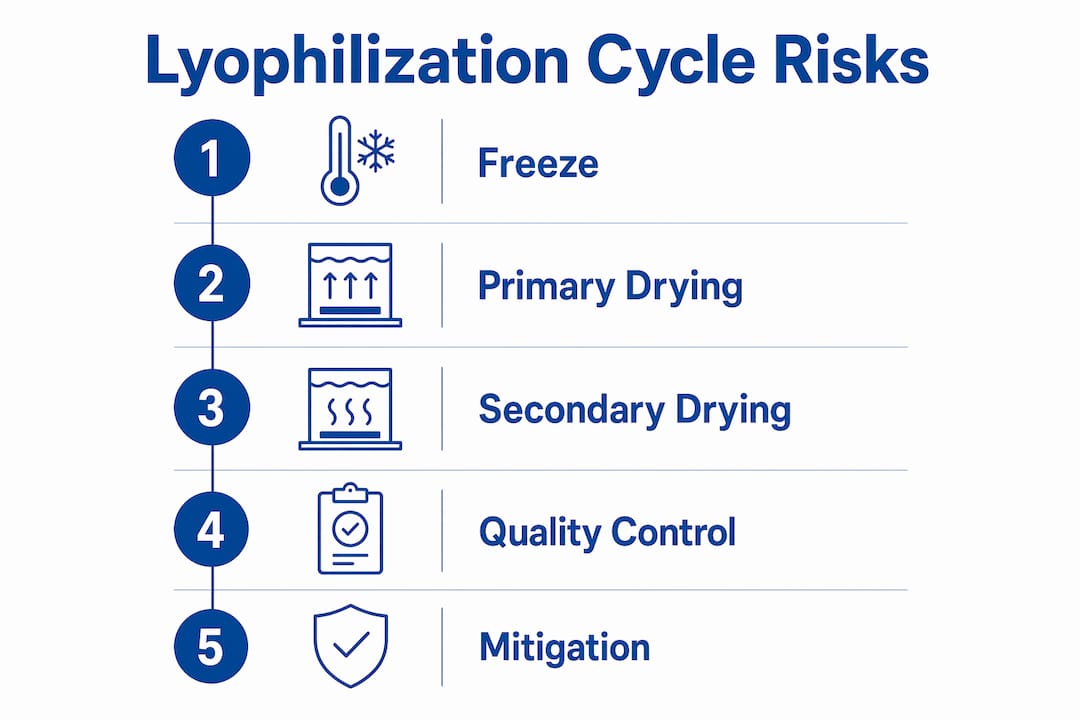
Lyophilization cycle failures are rarely catastrophic and visible. The most damaging failures are subtle, and meltback is the most common example. Meltback occurs when sublimation during primary drying is incomplete before the temperature ramp to secondary drying begins. Residual ice melts rather than sublimes, increasing moisture content and degrading cake appearance and product quality. The resulting cake may look acceptable but carry elevated moisture that shortens shelf life.
The table below summarizes the primary risk factors, their consequences, and the mitigation strategies researchers use.
| Risk | Consequence | Mitigation strategy |
|---|---|---|
| Meltback | Elevated moisture, poor cake quality | Confirm primary drying endpoint before temperature ramp |
| Collapse | Denatured product, QC failure | Keep product below collapse temperature throughout primary drying |
| Excessive residual moisture | Accelerated degradation, reduced shelf life | Target 0.5–3% residual moisture via validated secondary drying |
| Insufficient residual moisture | Protein structural damage | Avoid over-drying; validate lower moisture limit per compound |
| Poor cycle transfer | Batch variability between equipment | Use modeling and uncertainty analysis to define robust parameter ranges |
Cycle design is the primary defense against all of these failures. Managing thermal limits and defining clear endpoint criteria for each drying stage are the two most important controls a researcher can apply. Endpoint determination for primary drying is typically confirmed by pressure rise testing, comparative pressure measurement, or in-line moisture sensors rather than time alone.
Pro Tip: Never rely on a fixed time endpoint for primary drying. Product temperature and chamber pressure data together give a far more reliable signal that sublimation is complete. A time-based endpoint that worked in one lyophilizer may fail entirely when the cycle transfers to a different unit.
How do researchers apply lyophilization for optimized compound storage?
Practical protocol design starts before the sample enters the lyophilizer. The decisions made at the formulation and container selection stage determine whether the cycle will succeed or fail.
- Control the freezing rate. The freezing rate affects ice crystal size and the porosity of the final cake. A controlled, moderate freezing rate with an annealing step produces a consistent crystal structure that dries efficiently and yields a uniform cake across the batch.
- Set residual moisture targets per compound. Residual moisture levels of 0.5–3% balance structural preservation with degradation prevention. Peptides and small molecules may tolerate the lower end of that range, while some proteins require slightly higher moisture to maintain conformation.
- Choose containers appropriate for the compound. Borosilicate glass vials with lyophilization-compatible stoppers are standard. Vial geometry affects heat transfer and drying uniformity. Avoid containers that restrict vapor flow from the product surface.
- Store lyophilized compounds correctly. Sealed vials stored at 2–8°C or below, protected from light and humidity, maintain stability for the longest periods. Desiccant in the storage container provides additional protection after vials are opened.
- Follow validated reconstitution procedures. Add the reconstitution solvent slowly down the vial wall rather than directly onto the cake. Bacteriostatic water is the standard choice for many peptide compounds. Novatherix’s reconstitution guide provides step-by-step protocols for researchers working with lyophilized peptides.
- Document cycle parameters for every batch. Shelf temperature profiles, chamber pressure logs, and product temperature data form the validation record that supports reproducibility and troubleshooting.
Researchers working with complex blends, such as multi-peptide formulations, face an additional challenge: each component may have a different collapse temperature or moisture sensitivity. In those cases, the cycle must be designed around the most sensitive component in the blend.
Key Takeaways
Lyophilization is the most reliable method for long-term compound storage because sublimation removes water without heat or liquid exposure, preserving biological activity and enabling stable, room-temperature shipping for many research compounds.
| Point | Details |
|---|---|
| Three-stage process | Freezing, primary drying by sublimation, and secondary drying by desorption each protect compound integrity. |
| Residual moisture target | Aim for 0.5–3% residual moisture to balance stability with protein structural preservation. |
| Meltback prevention | Confirm primary drying is complete before ramping temperature to avoid moisture spikes and cake degradation. |
| Collapse temperature control | Keep product temperature below the formulation’s collapse temperature throughout primary drying. |
| Reconstitution protocol | Add solvent slowly down the vial wall and use validated bacteriostatic water for peptide compounds. |
What I’ve learned from watching lyophilization cycles fail
The most expensive mistakes in lyophilization do not happen during the run. They happen during cycle development, when researchers accept a time-based endpoint because it worked once and assume it will always work. I have seen batches of high-value peptides fail secondary drying because the primary drying endpoint was never properly validated. The cake looked fine. The moisture was not.
The other pattern I keep seeing is under-investment in freezing rate control. Researchers focus heavily on the drying stages and treat freezing as a simple step. It is not. The ice crystal structure formed during freezing determines how efficiently the entire drying cycle runs. An uncontrolled freezing rate produces heterogeneous crystal sizes across a batch, which means some vials finish primary drying hours before others. That variability is invisible until you see batch-to-batch inconsistency in reconstitution behavior or stability data.
Emerging approaches like process analytical technology and computational modeling of primary drying are changing how cycle development works. These tools let researchers define a design space rather than a single set point, which makes cycles far more transferable between lyophilizers and far more resistant to equipment variability. If you are developing a new lyophilization protocol in 2026, building in that modeling step from the start is worth the time.
— Paul
Novatherix research peptides for lyophilization-based studies
Researchers who need lyophilized compounds they can trust for critical studies should look at what Novatherix Laboratories offers. Every compound in the Novatherix catalog undergoes rigorous third-party analytical testing to 99%+ purity, and certificates of analysis are available for every product.
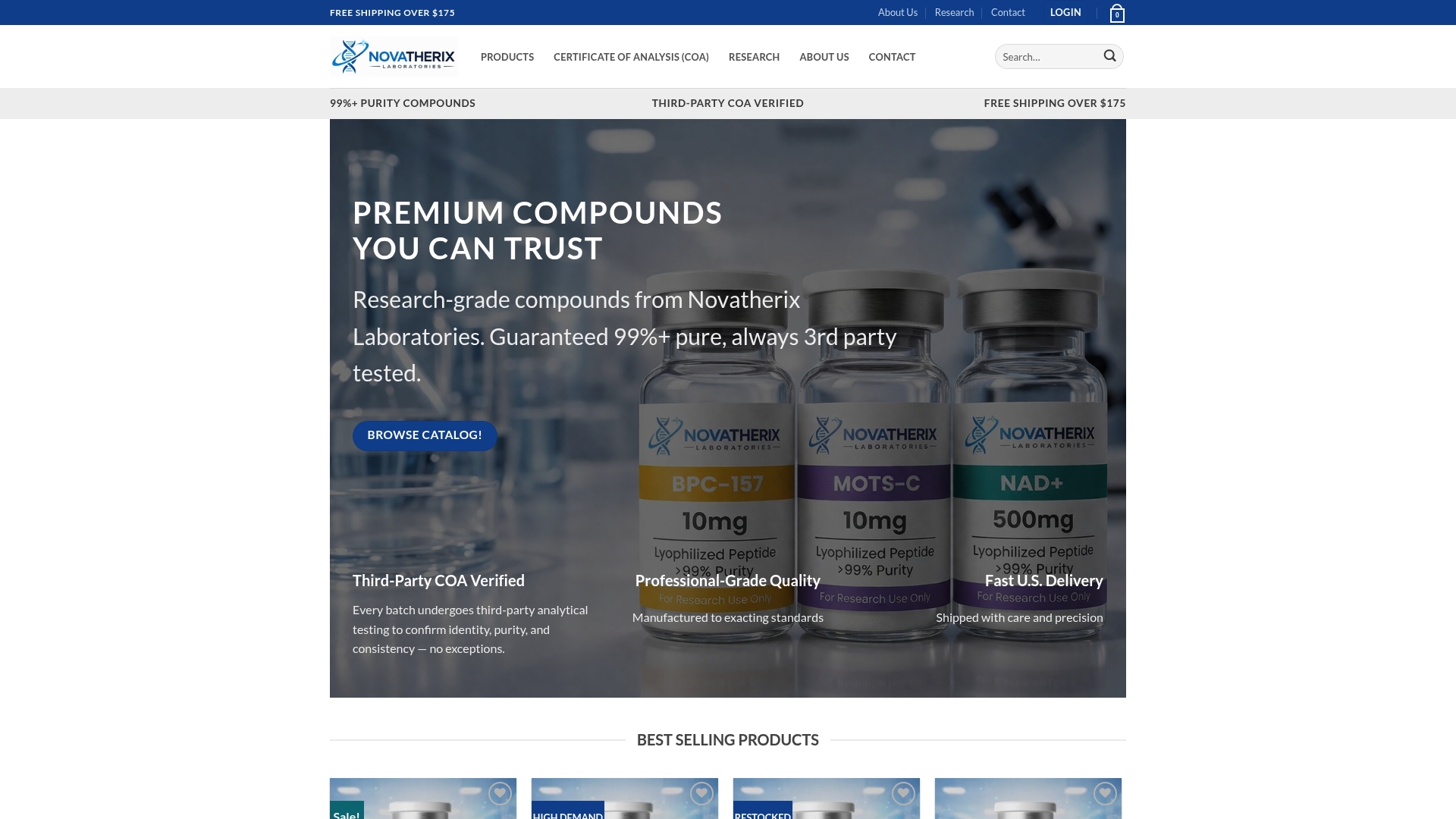
Novatherix ships fast across the U.S. and provides full product transparency, including COAs and verified purity documentation. The catalog includes research peptides such as ARA-290, PT-141, and BPC-157, all supplied in lyophilized form suited for laboratory storage and reconstitution. For researchers building or refining lyophilization protocols, Novatherix’s research peptide catalog is a reliable starting point.
FAQ
What is lyophilization and how does it differ from freeze drying?
Lyophilization and freeze drying are the same process. Both terms describe the removal of water from a frozen product by sublimation under vacuum, producing a stable dry solid.
What residual moisture level should lyophilized compounds target?
Most research compounds target 0.5–3% residual moisture. Levels above 3% accelerate degradation, while levels below 0.5% can damage protein structure in sensitive biologics.
What causes meltback during lyophilization?
Meltback occurs when primary drying is incomplete before the secondary drying temperature ramp begins. Residual ice melts instead of subliming, raising moisture content and degrading cake quality.
Can lyophilized compounds be shipped at room temperature?
Many lyophilized reagents and peptides can be shipped at ambient temperature because the removal of water eliminates the primary drivers of degradation. Cold chain requirements depend on the specific compound and its formulation.
How should researchers reconstitute lyophilized peptides?
Add the reconstitution solvent, typically bacteriostatic water, slowly down the inside wall of the vial. Avoid injecting directly onto the cake, and allow the product to dissolve fully before use. Novatherix’s reconstitution guide provides detailed protocols for common research peptides.
Recommended
- Research Preparation & Reconstitution Guide – Novatherix Laboratories
- Novatherix Laboratories | Research Peptides, COAs, Third Party Testing & Fast Shipping
- DSIP – Novatherix Laboratories
